
What to Know about Hair Loss During Pregnancy


Our bodies undergo all sorts of changes during pregnancy.
There’s bump of course, but also bloating and indigestion, fatigue, fuzz brain, and random things like bleeding gums and swollen ankles.
But there’s one symptom that can be really scary: hair loss during pregnancy.
Fortunately, while it is frightening, thinning hair during pregnancy is usually manageable for mamas-to-be.
And in the majority of cases, it will grow back.
But why does it happen? And what can you do about it? Let's find out.
In this article: 📝•
Does pregnancy affect your hair?
•
Hair loss during pregnancy
•
What causes hair loss during pregnancy?
•
Is hair loss a sign of pregnancy?
•
How to prevent hair loss during pregnancy?
Does pregnancy affect your hair?
In short, yes.
Pregnancy can affect your hair in all sorts of different ways—including making it thinner or fall out.
And that’s all down to your hormones.
When you’re pregnant, your estrogen and progesterone hormones start pumping hard.
That’s because they help support your fertility and make a nice comfy home for baby, firstly.
But these hormones do other things too.
They help your fetus to develop, loosen your joints, and give you that pregnancy “glow”.
But many women will notice the effect on their hair.
Lots of mamas-to-be get much thicker hair thanks to these hormones.
Some report their straight hair going curly—and vice versa.
Others notice more body hair than usual.
Anything’s possible, mama. And yep, unfortunately, that also includes hair loss.
(Aside: Does a hairy belly in pregnancy mean boy or girl? While some people suggest that a hairy belly during pregnancy means a boy, there’s no evidence of this at all.)
Hair loss during pregnancy
The most common conversations around hair and pregnancy relate to those lucky mamas who get luscious locks thanks to their hormones.
A much less well-documented pregnancy symptom is hair loss—but it happens for similar reasons.
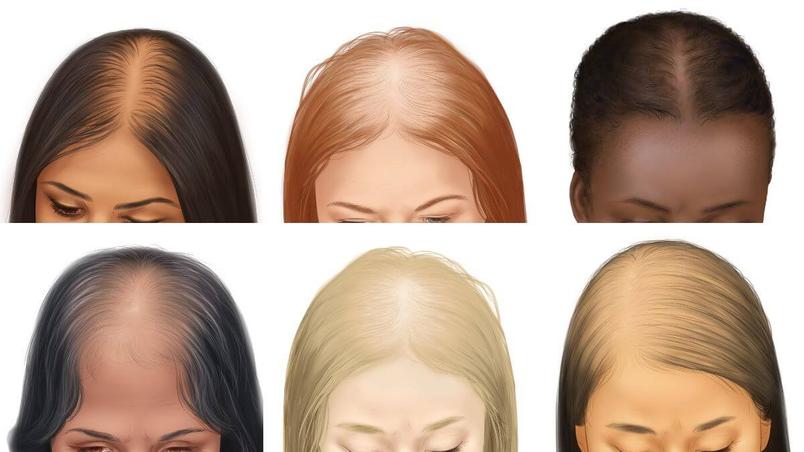
Hair loss is most common in early pregnancy and is usually referred to as telogen effluvium, which is a marked increase in hair loss occurring three months after a triggering event.
You'll recognize it as a noticeable (and unpleasant) increase in the shedding of your hair strands, which can thin across the whole scalp or fall out in clumps—usually in the first trimester.
What’s to blame? That’s your hormones again.
Why is my hair thinning during pregnancy?
Your hair is in a constant state of growth (known as the anagen phase) and shedding (known as the telogen phase).
Normally about 10% of your hair follicles are in a telogen phase, but when your body goes through a triggering event, hair shedding can increase by 30% or more.
As much as pregnancy is an exciting time, your body experiences huge hormonal changes, specifically a ninefold increase in progesterone and an eightfold increase in estrogen—hello, triggering event!
So, although you may not feel stressed per se, your body is in the midst of a stress reaction as it tries to come to terms with those pesky hormones.
So rest assured, mama, although it can be unpleasant and rather alarming at the time, it is a natural part of the pregnancy journey.
Will my hair grow back after pregnancy?
The good news about hair loss during pregnancy is that, yes, it should all grow back as normal after pregnancy—if not earlier.
As your hormones settle a bit, your body—and your hair follicles—should rediscover their natural cycle once more.
What causes hair loss during pregnancy?
While telogen effluvium is the most common cause of hair loss during pregnancy, there are alternative causes that might be contributing:
1. Thyroid problems
Thyroid conditions, such as hypothyroidism, are relatively common in pregnancy and can often result in hair loss, fatigue, and muscle pain.
Hypothyroidism is basically when your thyroid does not produce as much of the thyroid hormone as usual.
And these hormones are important during pregnancy, especially during the first few months of gestation, when the fetus heavily relies on them for healthy brain and growth development.
Complications during pregnancy, such as hyperemesis gravisarum or a molar pregnancy, may also cause thyroid issues too.
If you suspect that you may be suffering from thyroid issues, contact your healthcare provider. It's the best way to get ahead of postpartum complications like postpartum thyroiditis
2. Postpartum hair loss
We’ve been talking about hair loss during pregnancy, but it’s also very common for hair loss to happen after pregnancy too.
Remember what we were saying about hormones often causing luscious hair?
After pregnancy, your hormones (usually) return to normal—and that can sometimes cause brief periods of postpartum hair loss.
3. Anemia
Pregnant women are at greater risk of iron deficiency, and this means you don’t have enough blood cells to move all the oxygen around your body that you need.
Sometimes, hair loss can be the result.
4. Alopecia
And other times, your hair loss in pregnancy can be the result of something altogether unrelated.
If hair loss is accompanied by a rash, itchiness, or irritation, it could be the result of traction alopecia, where strain or pulling on your hair causes it to fall out.
It could also be alopecia areata, an autoimmune condition characterized by unpredictable or cyclical patterns of hair loss.
Is hair loss a sign of pregnancy?
While hair loss can be caused by pregnancy, it is not necessarily a sign that you're pregnant.
So, if you are losing your hair but don’t have any other indication that you might be pregnant, it’s not safe to make that assumption!
How to prevent hair loss during pregnancy?
There are some ways that you can treat hair loss when pregnant, but they won’t work on all causes.
So, if you think you're experiencing hair loss as a result of anemia or thyroid problems, do talk to a doctor.
The same goes for traction alopecia or alopecia areata.
They can help guide you toward a solution.
Outside of medical support, here's how to stop hair loss during pregnancy:
- Avoid tight hairstyles: If you usually go for a bun, braids, or ponytail, it might be best to change up the style for the time being. Excessive tension can cause strain on your follicles, making hair loss more likely.
- Steer clear of heat: That includes heat stylers, curling or straightening irons, and other harsh treatments. Your hair may be delicate right now—and it is best if you let it relax.
- Use a wide-toothed comb: When combing, wide teeth are better, as they pull less on your hair.
- Avoid medications: We're talking medicinal hair treatments like Minoxidil, which can help regrow hair. While they can be tempting, these are not advised for women who are pregnant or breastfeeding.
- Keep a healthy, balanced diet: Try to follow a diet with lots of Vitamin C, Vitamin E, and Zinc—deficiencies in these can contribute to an increased risk of hair loss.


Trending in the community
Pregnant with baby 2

10
Planned c section

10
I have a feeling like I might get attacked from this but I’m going to say it anyways. incognito 🥸 GLP1s being mainstream for regular people who are NOT diabetic or morbidly obese is bad for so many reasons 💉💉💉
12
C section compression socks

1
7
Getting pregnant after c section
3
Leaving baby for date night
3
Want to find your village?

Scan to Join
Rated 4.4


Trusted by 5M+ women
.png?_wwcv=1371)
Download the Peanut App


